Demon's Night Fever Gets Korean Release on PS5, Switch, PC
Published on · Updated on
Arc System Works Asia launches the Korean version of Demon's Night Fever on PS5, Switch and Steam, with a launch event and an eight-chapter webcomic.
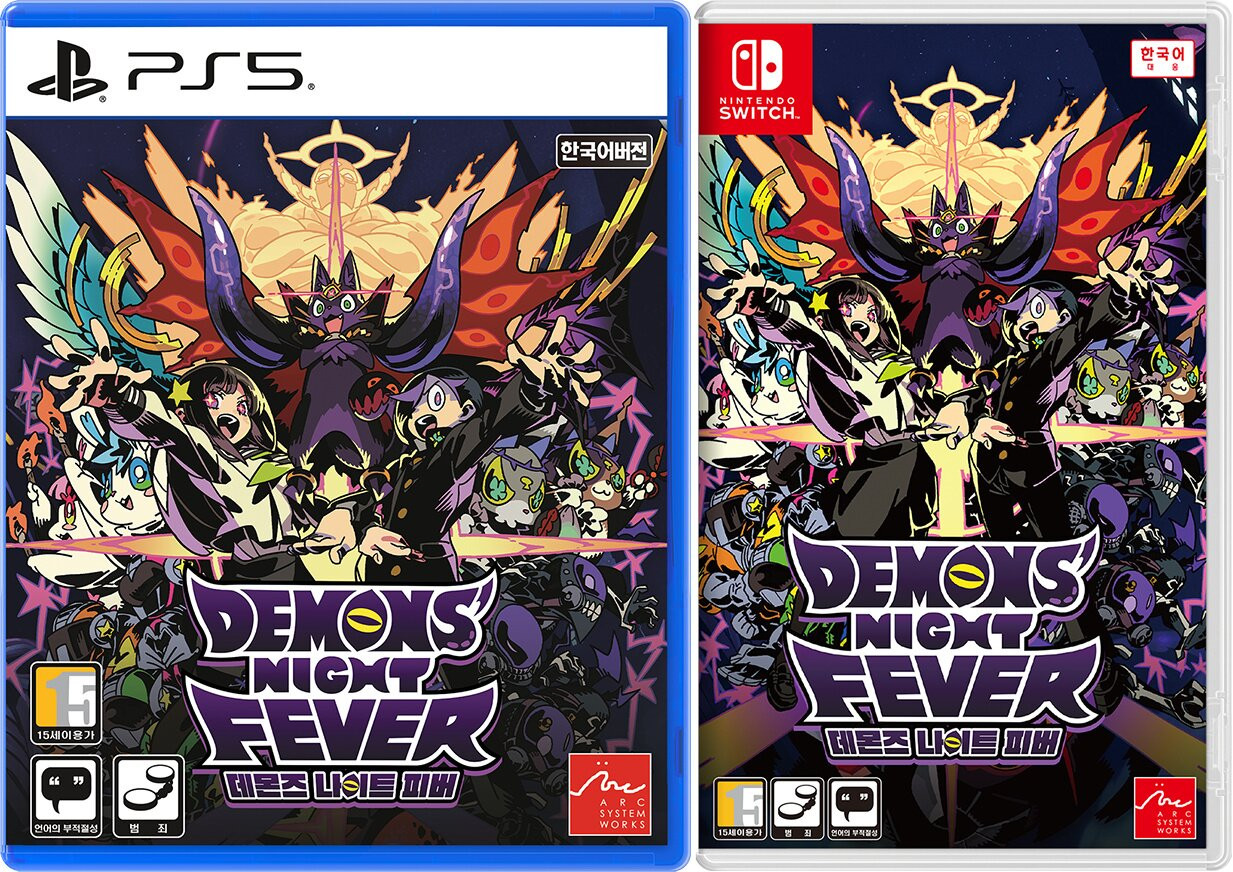
Arc System Works Asia released the Korean version of Demon's Night Fever on Thursday, October 22, for PlayStation 5, Nintendo Switch and Steam. The stat-raising speedrun RPG — marketed with the tagline "enemies? allies? kill, kill, kill!" — had already arrived on international storefronts one day earlier, on October 21, and now receives a full Korean localization with translated interface, subtitles and dedicated promotional material. The game is developed by Drecom Co., Ltd. and published by Arc System Works, with rights shared with SuperNiche LLC.
The Korean debut is more than a language update: Arc System Works Asia prepared a launch campaign with a social media contest, physical editions for PS5 and Switch and an eight-chapter webcomic. The move reinforces the Japanese publisher's bet on the South Korean market, where it keeps a subsidiary dedicated to localizing and distributing its own titles and partner games.
An RPG that celebrates villainy instead of fighting it
Demon's Night Fever presents itself as a grid-based turn-based strategy RPG, heir to the Japanese SRPG tradition, but with a conceptual twist: the player does not control a hero, but a god of death and his disciple on a revenge quest. The pitch is about "enjoying evil," and the combat system was designed to reward cruel decisions.
The mechanical backbone is the Peon Exploitation System. Instead of protecting allied units, the player sacrifices them: kill skills and controlled detonations blow up your own minions to deal area damage. Every fallen underling, however, is not gone for good — peons return stronger, turning sacrifice into a form of progression.
The second pillar is the Perverse Points currency. The more evil deeds the player commits — pillaging, abductions and eliminations — the more resources are available to upgrade the army. The loop is closed by a per-stage time limit, which gives the game its "RTA" (real time attack) layer: players must extract maximum power in the fewest turns possible.
"It is a stat-raising RTA simulation RPG that breaks common sense, built on the concept of 'enjoying evil,' with the Peon Exploitation System that sacrifices allies in battle and Perverse Points that make characters stronger the more evil deeds they commit."
Giga Super Death, the death god turned into a baby
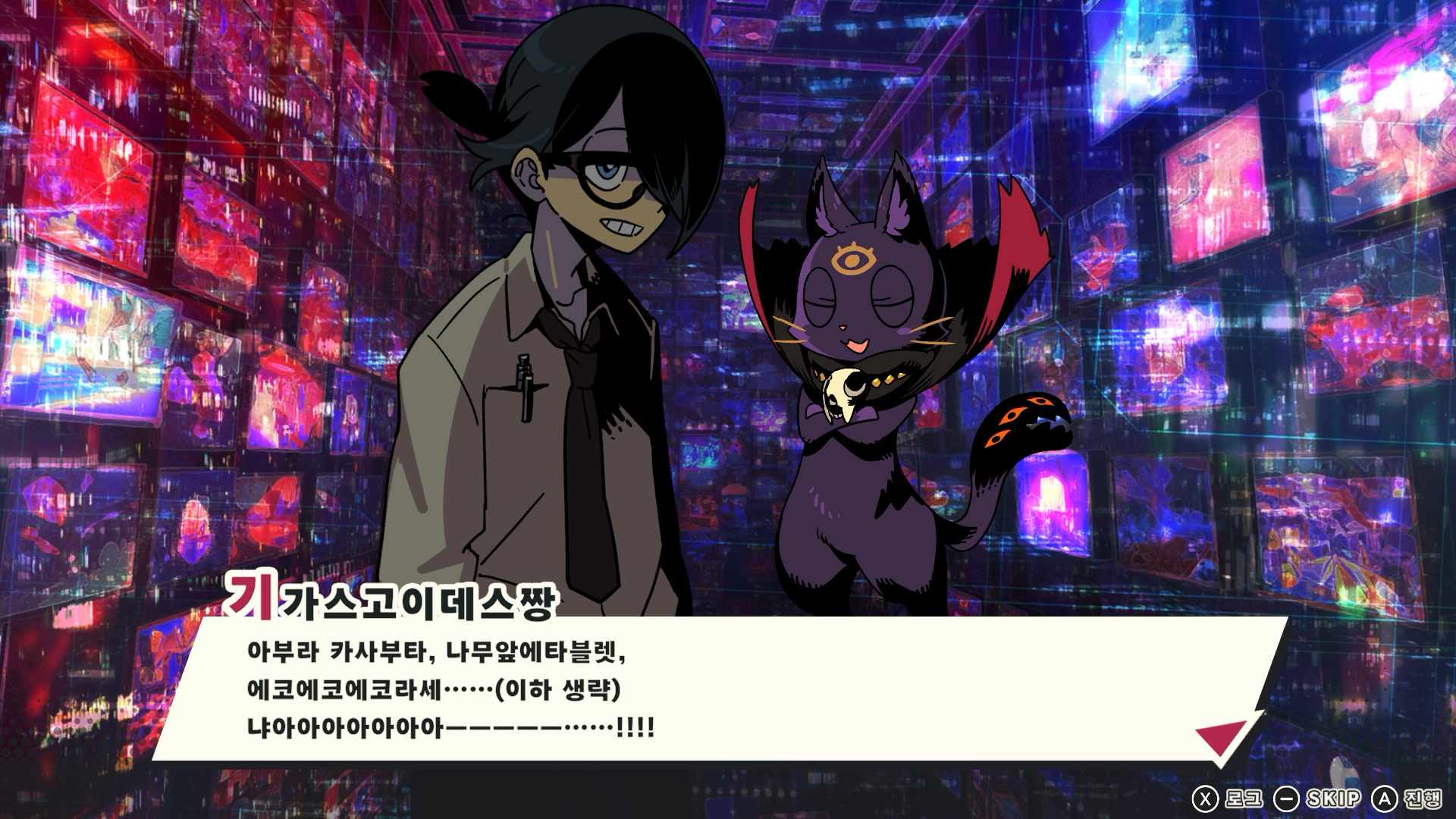
The story starts from a deliberately absurd premise. Giga Super Death, the most wicked of all demons, was one step away from killing God when he was transformed into a helpless baby. Anticipating the disaster, he had spent nights developing a resurrection program called "Demon's Night Fever." When the ritual is finally activated, the one caught in the trap is Killshiro Katanaka — a gloomy programmer who despises the world and works himself to exhaustion.
Shared interests seal a bizarre pact between the demon and his new disciple. From there, the campaign moves through chapters that completely change the scenario: every defeated boss alters the state of the world, and the player must face super sentai squads, magical girls and other parodies of established genres, always from the villains' point of view.
The creative team gathers well-known names from the Japanese industry. Sohei Niikawa handles production, original concept and scenario; Yuji Himukai is responsible for character design; Tatsuya Yano scores the soundtrack; and artist syudou performs the theme song. The art direction leans on angular lines and saturated colors, mixing dark anime with Western comic aesthetics.
Platforms, languages and price
The Korean version launched in physical media for PlayStation 5 and Nintendo Switch, alongside digital editions on both platforms and on Steam. International PC distribution began on October 21, priced at R$ 149.99 on the Brazilian Valve storefront. The game is strictly single-player and works offline only — there are no co-op, multiplayer or connection-dependent features.
The language package is a point of attention for Brazilian players. Voiceover is available in Japanese and English, while subtitles cover Korean, Japanese, English, Traditional Chinese, Simplified Chinese and French. There is no Brazilian Portuguese localization, which means interested players must follow the story in English or French.
| Item | Detail |
|---|---|
| Korean release | October 22, 2026 |
| Steam release | October 21, 2026 |
| Platforms | PlayStation 5, Nintendo Switch and Steam |
| Developer | Drecom Co., Ltd. |
| Publisher | Arc System Works / SuperNiche LLC |
| Genre | Strategy simulation RPG |
| Players | 1 (offline only) |
| Steam price (Brazil) | R$ 149.99 |
It is worth noting that the Korean launch does not change the game's content: it is the same campaign, with translated text and market-specific promotional assets. The publisher confirmed a single-purchase model, with no battle pass or microtransactions announced so far.
Official trailer: watch the Korean version trailer for Demon's Night Fever on the Arc System Works Asia channel.
Launch event, physical edition and webcomic
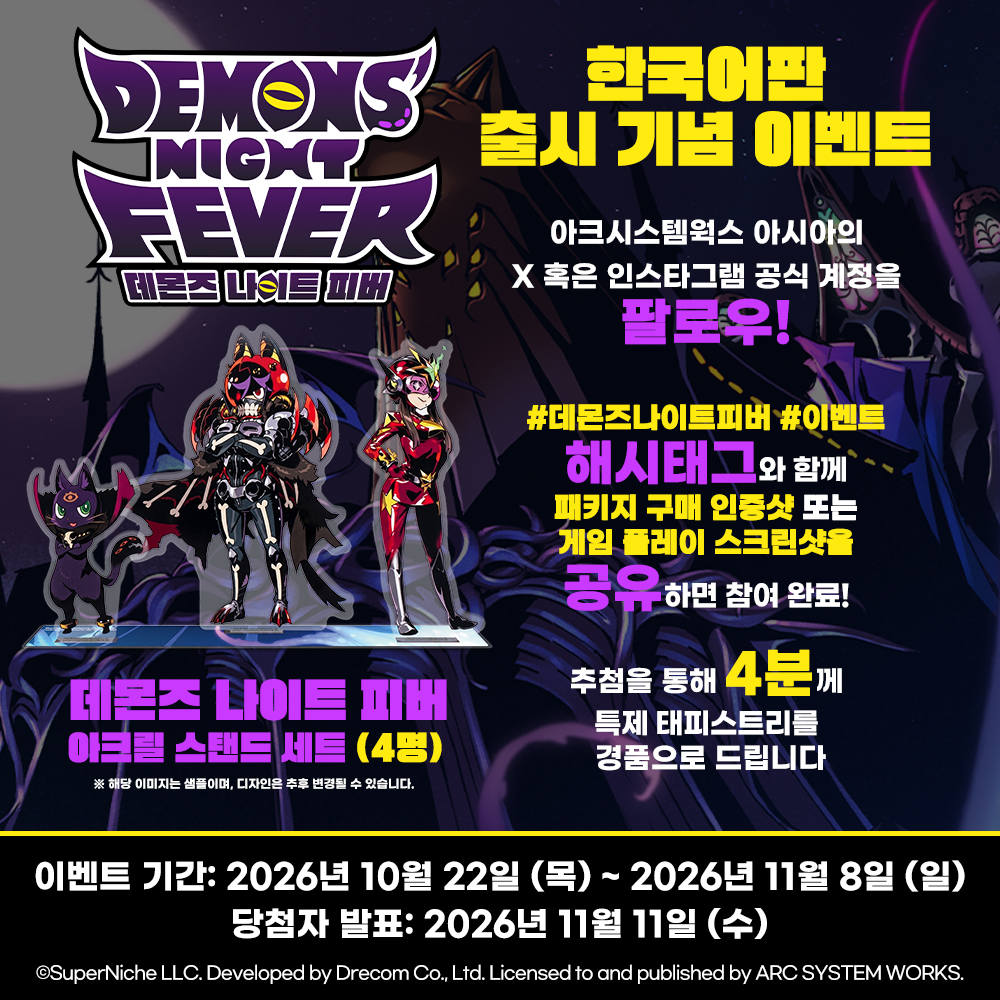
To mark the debut, Arc System Works Asia is running a social media campaign between October 22 and November 8. The prize is an acrylic stand set featuring the game's characters, to be drawn among four participants. The result will be announced on November 11 through the subsidiary's official channels.
Entry requires proof of purchase of the Korean physical edition. Players must photograph the product and post the image with a celebratory message, using the hashtags #데몬즈나이트피버 and #이벤트 on X or Instagram — in the latter case, tagging @arcsystemworks_asia. It is also possible to enter by commenting on the company's official blog post. Each participant is limited to one entry.
Beyond the giveaway, the subsidiary is publishing the webcomic "Demon's Night Fever Has Started" on its social channels, with eight chapters. The series humorously depicts the encounter between Kyoshiro, the programmer who hates the world, and Gigasgoides, the death god carrying the resurrection program of the same name. The material works as an entry point to the game's universe and is already available on the official channels.
Early reception and what to expect
In the first hours after the international debut, reception on Steam sat in "mixed" territory: the store page showed 53% positive reviews across 13 user analyses on Thursday afternoon. The sample is small and subject to swings, but it suggests the title will divide opinions — hardly a surprise for a niche RPG betting on dark humor and punishing mechanics.
"The game is single-player and supports offline play only. Audio voiceover is provided in Japanese and English, while subtitles support Korean, Japanese, English, Traditional Chinese, Simplified Chinese, and French."
For Brazilian players, the main obstacle remains language. Without Portuguese subtitles, Demon's Night Fever targets those already familiar with Japanese strategy RPGs who do not mind playing in English. The lack of multiplayer also limits its reach: this is a solo experience focused on repetition and route optimization — traits that appeal to the speedrun community but push away players looking for long, linear campaigns.
Even so, the Korean launch consolidates Arc System Works' strategy of expanding its footprint in Asia. Best known for fighting game series such as Guilty Gear and BlazBlue, the company has been diversifying its catalogue with RPGs, adventures and remasters. Readers following other moves in the Asian market can check our coverage of INDIECRAFT 2026, which awarded six Korean independent games. Fans of revivals on hybrid consoles can read about Re-Volt, headed to Switch and PS5 in November.
Conclusion: villainy as a system, niche as a choice
Demon's Night Fever is one of those projects that exist because a publisher decided to bet on an unlikely idea: turning cruelty into a progression mechanic and the failure of allies into a tactical advantage. The result is a strategy RPG with a strong visual identity, peculiar humor and a learning curve that demands patience.
With the Korean version on shelves, the game now covers the three major Asian console markets — Japan, China and South Korea — in addition to global PC distribution. Next steps depend on commercial performance and community response: content updates, balance adjustments and possible further localizations have not been confirmed by the publisher. Readers who want to keep up should follow the official game page and the games section of O Santuário Geek, where this launch will be updated should anything change.
Official sources: Arc System Works Asia press release, the official Korean website and the Steam store page.
Suggested and related articles
Duet Night Abyss 1.7 Adds Rhythm: Flamewrought
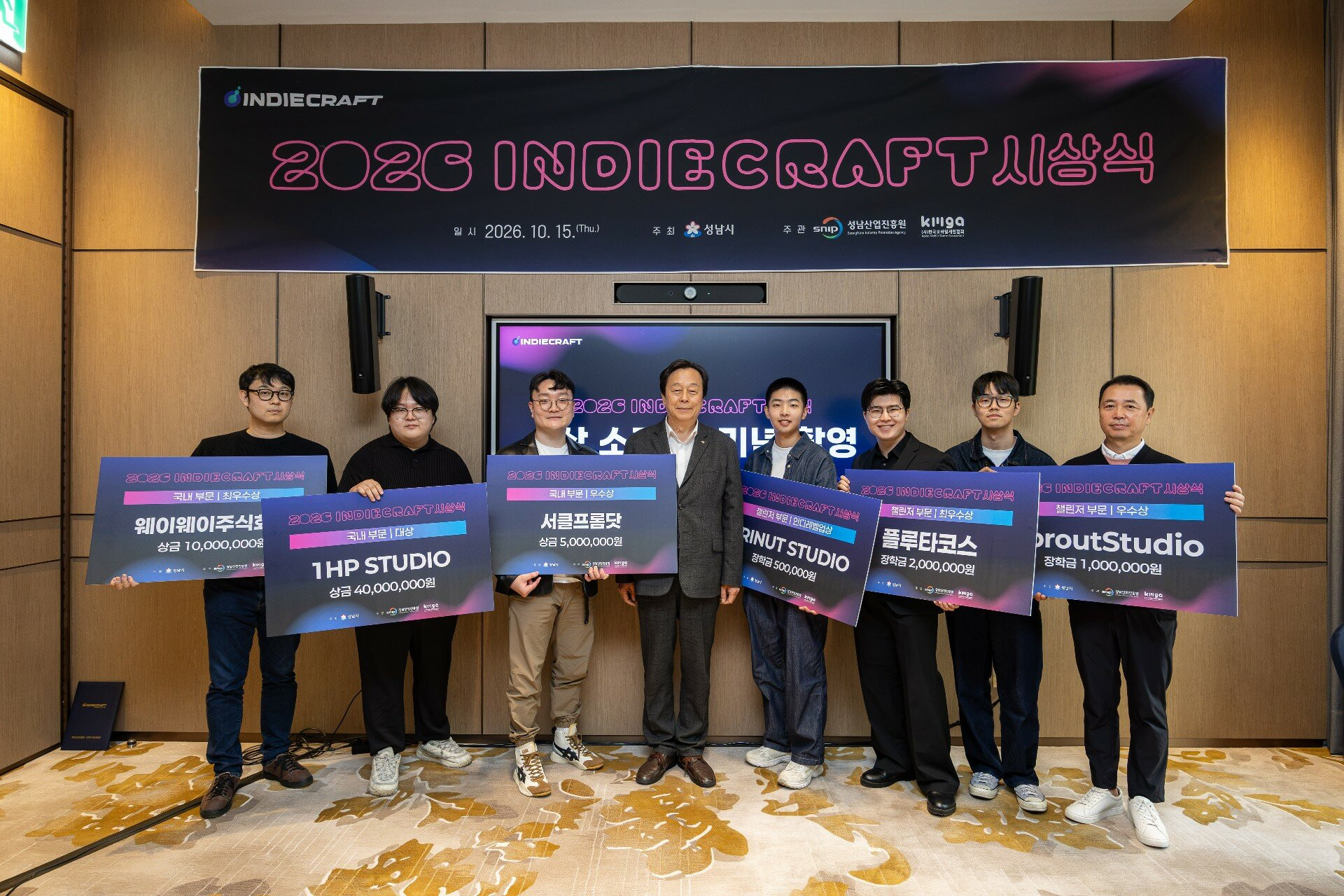
INDIECRAFT 2026 crowns INARI and six Korean indie games
Capcom Confirms G-STAR 2026 Spot With 35 Booths
Solo Leveling: ARISE Tops 70 Million, Reveals 2.5 Update

League of Legends will get a brand-new client in 2026, Riot Games announces